
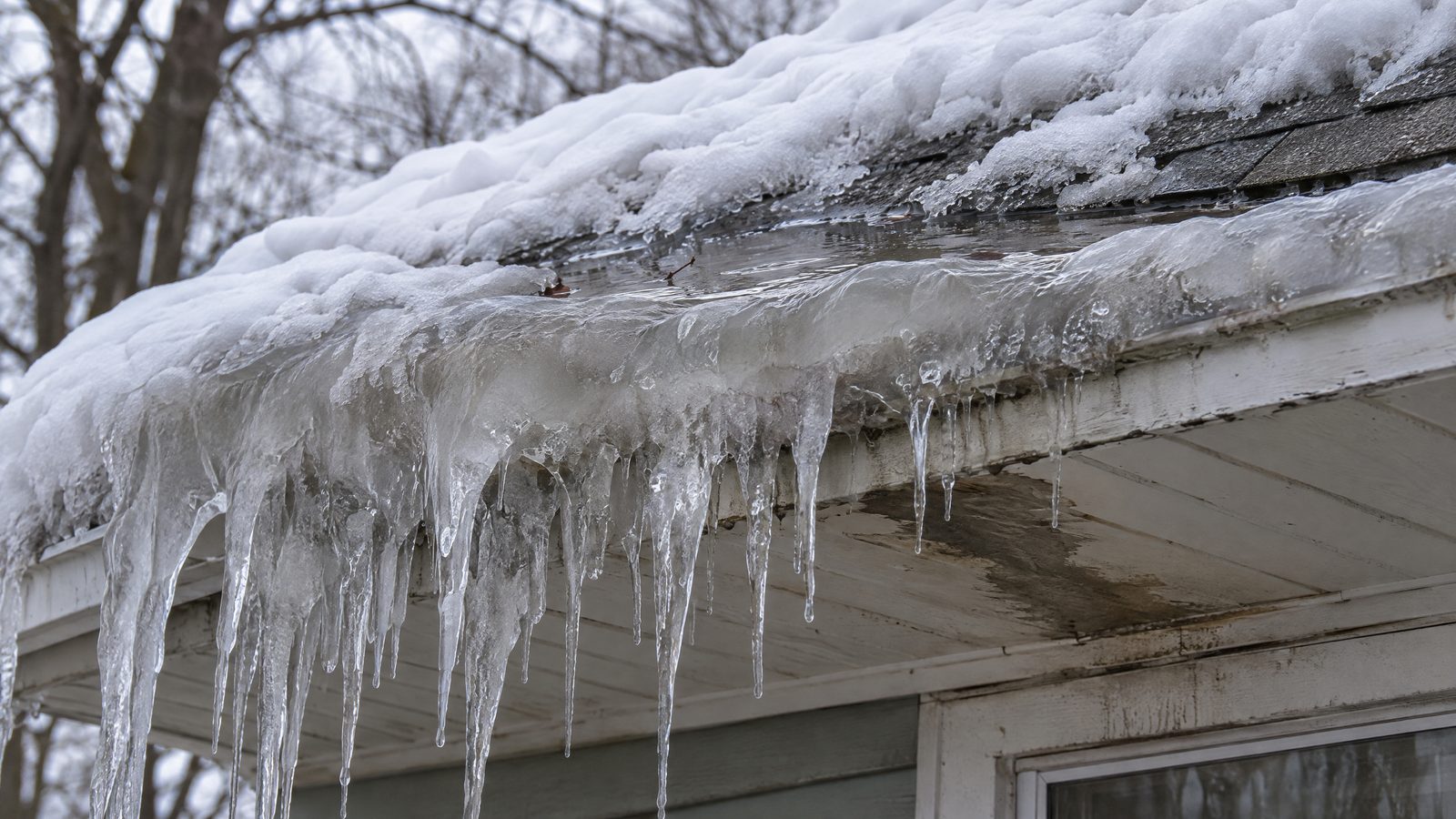
Ice dam and roof inspections in Wyoming, MI
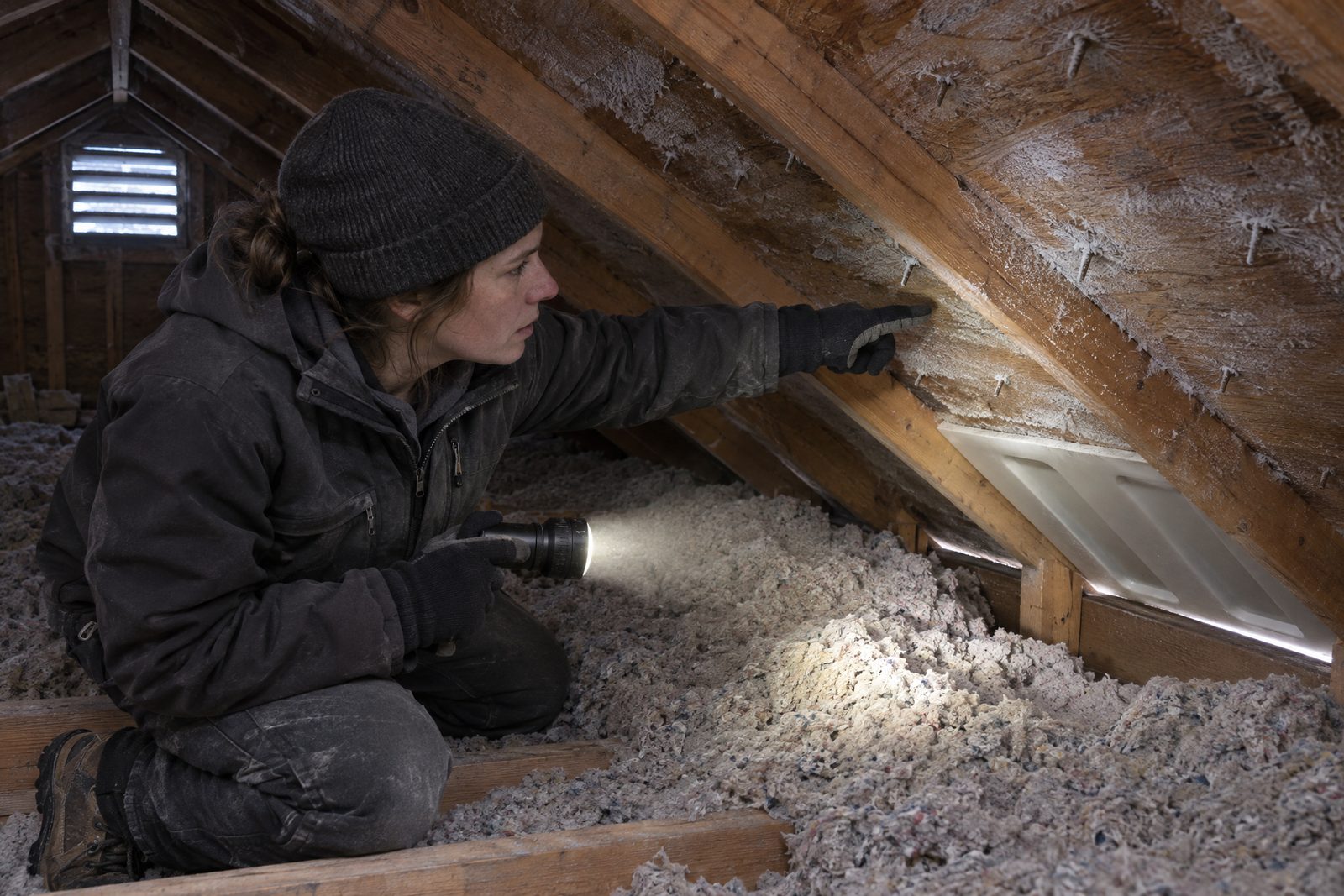
An ice dam is a roof problem you fix in the attic. Warm air leaking out of the house warms the roof deck, melts the snow from underneath, and the water refreezes over the cold eave. So our inspection covers both: the roof, for damaged slates, shingles and flashing, and the attic above the trouble, for air leaks, insulation pulled back from the eaves, blocked soffit vents and frost on the nails. You get dated photos of both and a written list of fixes, smallest first.
- The roof and the attic, every time
- Air leaks and insulation photographed
- Smallest fix listed first
Tell us where the ice builds
We answer the same day. In a thaw after a big snow, we answer into the evening.
Water coming through the ceiling right now? Call or text: 616-555-0162
How a roof and attic inspection goes
About an hour on most houses. You can come up the attic ladder with us if you want to see it.
We read the roof from the ground.
Bare patches in fresh snow and long icicles show where heat is getting through.
Then the roof itself.
Slates, shingles, flashing and the eaves where ice has sat, every spot photographed.
Then the attic above it.
Air leaks, insulation depth at the eaves, the soffit vents and frost on the nails.
A written list, smallest fix first.
Air sealing and insulation before roofing, if that is what the house needs.
Book a free roof and attic check
“Every winter we had icicles a yard long and a stain over the kitchen window. Two roofers told us we needed a new roof. Nora went into the attic first, found the bath fan venting into it and the insulation pulled back at the eaves, and fixed that. No ice dam this year.”
What we look for in the attic
Most of the heat that makes ice dams gets into the attic as air, not through the insulation. The usual paths are the attic hatch, recessed lights, the bath fan, plumbing and wiring holes in the top plates, and the chase around a chimney. A bath fan venting into the attic instead of outside adds moisture too, and that shows as frost on the nail tips in a cold snap.
At the eaves we check whether the insulation reaches all the way over the wall and whether the baffles keep it from blocking the soffit vents. Cold outside air should come in at the soffits and leave at the ridge, keeping the deck cold so the snow on it stays snow.
The fixes, in the order we suggest them
Seal the air leaks
Foam and caulk at the top plates, around pipes and wires, the hatch and the light housings. Usually the biggest change for the least money.
Insulation at the eaves
Insulation brought out over the top of the wall, held back from the vents by baffles.
Open the vents
Soffit vents cleared and a ridge vent where it is missing, so cold air runs under the whole deck.
Vent the fans outside
Bath and kitchen fans ducted through the roof or wall, not into the attic.
Repair the roof
Slates, shingles and flashing the ice has damaged, once the cause is fixed. See roof repair.
How much snow a Grand Rapids roof carries
The National Weather Service office in Grand Rapids puts the normal snowfall at the airport at 77.6 inches a year, and the snowiest year on record brought 143.7 inches in 2008. The record snow depth on the ground, 27 inches, came on January 27, 1978, during the blizzard that dropped 16.1 inches in a day.
The Michigan Residential Code sizes roofs for that. Its table of ground snow loads lists most of Kent County, including Wyoming, Grand Rapids, Kentwood, Grandville, Walker and East Grand Rapids, at 35 pounds per square foot. A healthy roof carries ordinary snow without help. What it does not handle well is water: meltwater held at the eave by ice. That is why the inspection is really about heat.
Questions about ice dams and inspections
What causes an ice dam?
Heat. Warm air from the house leaks into the attic through gaps around light fixtures, bath fans, the attic hatch and plumbing, and warms the roof deck. Snow melts on the warm part of the roof, runs down to the eave, which hangs out past the wall over cold air, and freezes there. The ridge of ice grows each day, and the next meltwater backs up behind it.
Are big icicles a problem?
They are a sign. Long icicles mean meltwater is reaching the eave and freezing, which means heat is getting to the roof. On their own they are a hazard to people below; with an ice dam behind them they are a leak waiting for the next thaw.
Will a new roof stop my ice dams?
Not by itself. A new roof gets an ice barrier at the eaves that keeps backed-up water out of the house for a while, but the dam still forms if the attic is warm. Fix the heat loss first. If the roof is worn out anyway, see roof replacement.
Should I put heat cables on the roof?
Cables can keep a channel open in a problem spot, and they use power all winter. We would rather find where the heat is coming from. If a cable is still the right answer for one valley or gutter, the estimate says so.
Can you remove an ice dam that is leaking now?
Call or text 616-555-0162. We clear a channel in the ice with low-pressure steam, which does not damage slates or shingles, so the water can drain. Then we look at the attic so it does not come back.
Do you inspect before I buy a house?
Yes, across Grand Rapids, Kentwood, Grandville, Walker and East Grand Rapids. In winter we also note where the snow has melted off the roof and where icicles hang, which shows where the heat is going.
Nora goes up the attic ladder herself

Nora Vanderveen, owner and roofer
Nora answers the phone, goes up on the roof and into the attic, and writes the estimate herself. She learned slate on Grand Rapids' older houses and still does the slate work.
Book a free roof and attic check
We answer the same day. In a thaw after a big snow, we answer into the evening.
Water coming through the ceiling right now? Call or text: 616-555-0162

Tell us where the ice builds up
The address, which side of the house the icicles are on, and where any stain or drip shows inside. A photo from the ground helps.
Book a free roof and attic check
We answer the same day. In a thaw after a big snow, we answer into the evening.
Water coming through the ceiling right now? Call or text: 616-555-0162